we learn to love by loving
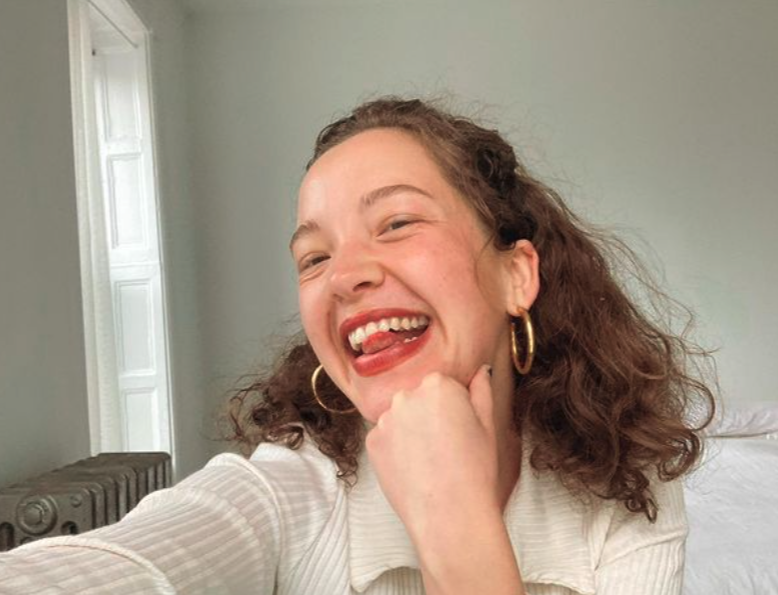
Colleen is a writer and essayist who focuses on the intersection of queerness & food. She resides in Brooklyn, New York.
What was the last thing you ate?
I'm under the weather so my girlfriend made this beautiful carrot ginger soup that I just ate. It was so nourishing and delicious.
What was the last thing that you cooked?
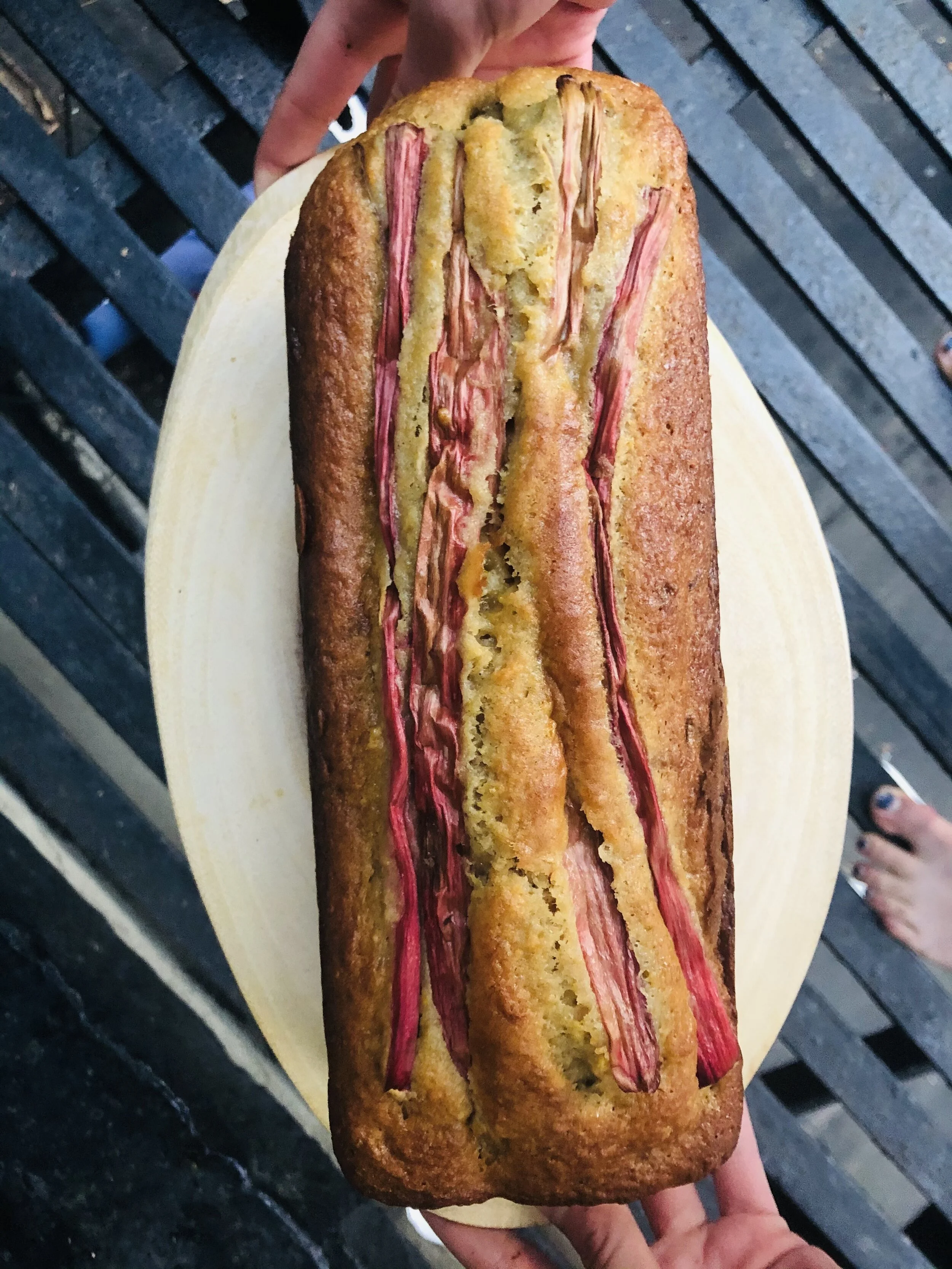
Last night I had my friend and his partner over for dinner. I made a rhubarb loaf, which was special because rhubarb is in season. I had to figure out something to do with those bright red stalks!
What is your favorite health food?
At the beginning of the pandemic, I would get into this weird void where I would be writing and then it would be 2pm and I wouldn't have eaten anything all day. My partner and I would get so hungry and then make these lavish lunches. So, we started making green smoothies in the morning, which helped me feel energized and happy at the beginning of the day.
Did food stay at the top of your priority list during the pandemic?
I feel like it became more of a priority for me because I was looking for ways to feel connected to the earth and to my body that felt safe and sustainable.
I would cook with my partner, listen to music, and do things like follow along with Samin Nosrat in her piece for the New York Times and make a giant lasagna for like, 12 hours. It was a way to connect to my body and fill time that I hadn't had before.
You mentioned that you're a writer, what is your focus?
I'm an essayist, I would say 60 to 70% of them revolve around queerness and food. It’s an intersection that I have found to be so salient in my own life and in the lives of the people that I love and spend time with. It's one of those things where the deeper you go, the more there is to think about, talk about, and feel.
What are the main tenets of that intersection that might be surprising or interesting to know?
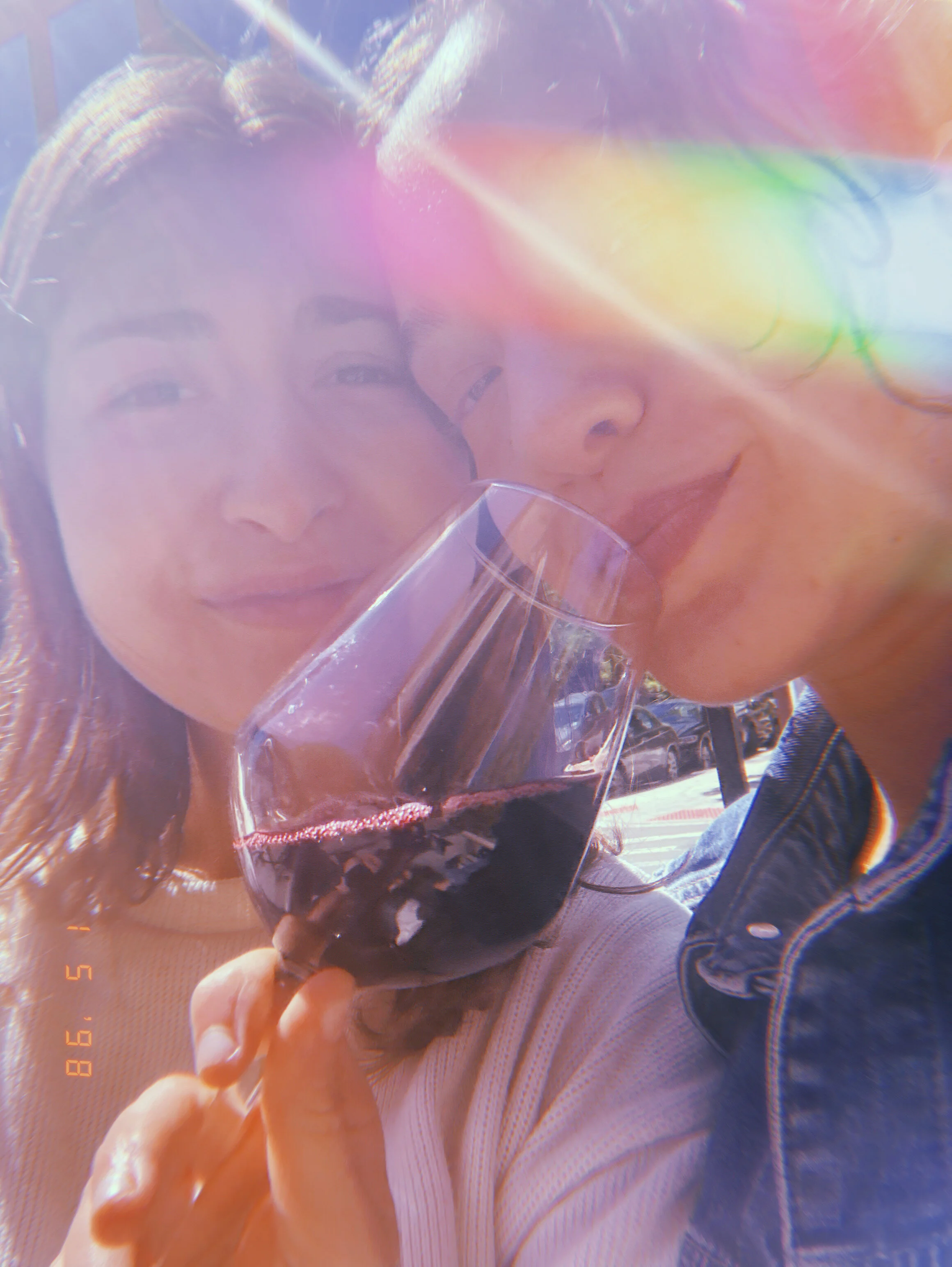
I think so much of queer life revolves around this idea of chosen family, and that for a lot of people, their immediate families weren’t a place of sanctuary, safety and joy. We had to cultivate and build these families for ourselves. A lot of that revolves around food. That's why I will always love food, because I feel like it's one of the few places in mainstream American culture where we're encouraged to share. When I think about so many of my macro ideals and visions for the world, it's based on that sense of sharing a pizza with someone: There is enough for everyone, we're just conditioned to believe that there's not. In queer culture and queer families, sharing with one another and cultivating spaces of joy and celebration around food has been so important.
What role did food have in your household growing up?
I think it was always this place of fear. Men in my life would make comments about people’s weight, body, and appearance that really impacted my own sense of self, the world, and what it meant to be a woman. That intersected with my queerness as I got older and realized that my womanhood isn’t in service of men or masculinity. It's about my own inherent joy, body, and pleasure and that belongs to me. Coming out and coming into my queerness was a way of healing a lot of those messages I received as a child.
What are ways that you've discovered to combat those messages? What can we learn from you and your community?
That we heal together.
We have this diet culture rhetoric that says, If you lose weight, then you'll be happy. Now the rhetoric is Self care! Light a candle and think your way out of it and you'll be happy.
But so often, healing happens through relationships. Whether it's a lover, a friend, a chosen family member. It’s someone who looks at you and says I love you, I see you, I adore you. The internal self-work is crucial and valid, but being in relationship with people who love you is such a vital part of healing that we too often overlook.
And away from that message that other people can't love you until you love yourself, which is so false. We also learn how to love from others.
A mentor once told me that we learn to love by loving.
Oftentimes in American culture, there is an idea that once we become wealthy and thin, everything will fall into place. Jia Tolentino critiques this idea of “self-optimization” that invades every aspect of our lives. In reality, we learn how to love and cultivate joy through authentic relationships and commitment. That's much deeper than those surface-level concepts that we've been taught. It takes commitment and care and nourishment, to ourselves and to each other.
It actually helps us live longer and be happier. Those who are in community and eat meals together have the longest lifespans.
Are there examples of when you felt like that was happening in your life?
My strongest memory of this is probably my 21st birthday. My best friend at that time threw me a surprise party. Everyone was asked to bring a potluck item, something to share. I just remember feeling so held, taken care of and loved by my community. I had this light bulb go off that said, Oh, this is my responsibility to the world now. Like, If I've been loved in this way and have been given all of this, I have a responsibility to share that. That has impacted how I continue to move through the world.
Focusing on food under the lens of self and community is so important.
I think we're all afraid of reaching out to people in that way. We don't realize how much people are craving that sense of joy and celebration. Then we have those moments of deep human connection when you're sharing a meal and it's revelatory. The more vulnerable we are to ask, Hey, do you want to come over for dinner? Do you want to make something together? Do you want to try this? Even that question of asking, Do you want to try this? can be very vulnerable because we’re asking someone to join in on that moment with us. Through that vulnerability, we access so much more well-being than whatever is popular at the moment. It’s an ancient question.
What was the journey like for you to develop positive thought processes and behaviors around food?
I went to UCLA and during my freshman year, I developed a really serious eating disorder. I think it was because of the inverse of everything that we just talked about. I was so lonely. I didn't feel like I had any friends. I was scared to eat by myself in the dining hall, so I didn’t. I was over-exercising, trying to achieve a particular image in order to fit in, even though I didn’t realize that’s what I was doing at the time.
In my sophomore year, I started working at a poetry organization. I met these two women who are still my best friends to this day. They had such an abundant and powerful relationship with food. I would go over to their house and spend the night and they would always have wine, cheese, and crackers. We would wake up and make eggs and toast. It was this place where I was taken care of and loved unconditionally. It was the first time I realized that food didn’t have to be punitive - it could be generous and celebratory. Then as I got older, I really held on to that.
Two years ago, I met my current partner. She's the best chef I've ever met in my entire life. She loves me deeply and sees my body in ways that I never thought anyone would. That has shown me that my body is inherently capable of joy, and pleasure - and that's my birthright. Not shame and hatred. That's not why I was put on this earth. I was put here to share, dance, kiss people, and laugh. I think having those relationships with people who reflected back the best versions of me really helped me move through that traumatic relationship with my body.
That's very powerful. What would you say to people who are going through a similar experience right now?
You know, I still have days that are so hard and challenging. I would say, you think that you're the exception to the rule, but you're not. When I was having my worst days around body-image, I would think to myself, that other person is so beautiful, smart, and worthy of love. I'm the one person on this earth who is the exception. There's something inherently and fundamentally wrong with me. If other people found out about it, they would also agree that I'm the exception. So I would say, as difficult as it is, try your best to counter that voice and trust that you are inherently worthy. Try your best not to get down and compound the shame in thinking you should be somewhere else. Trust your own timeline, because I think it takes years and years. You don't just fall asleep and wake up and feel better. It takes time to heal.
That's resonant in so many ways.
What do you think is important for people to know about queer femmes when it comes to the arts of eating and cooking?
My biggest epiphany around this was that I thought cooking was something that you do for other people. I thought my sexuality was something that's done in service of other people.
I learned that pleasure, power, and capability belong to me. I get to choose in what contexts and circumstances I want to use that, but that power is mine. There have been many extraordinary queer people and femmes who have reclaimed cooking, eating and pleasure as a space for themselves not in service of something else. I feel really grateful to be a part of that lineage.
What is your wish for the women of the world when it comes to eating and cooking? What's your vision for us?
I always think that we should dream up the world that we want, as much as we critique the one we currently have, so I appreciate this question.
I just want so much joy for us. I want us to enjoy the fruits of our labor, literally. To eat, dance, laugh together, and to provide the things for our community that we always did in service of other people. I want us to all share that giant pizza! [laughs]
This interview has been edited and condensed for clarity.