don’t limit the ceiling of your joy
What was the last thing you ate?
I just had a smoothie for an afternoon pick me up. I was doing some precise computer work, so I needed a bit of energy.
What was the last thing you cooked?
I did some meal prepping because this week is really busy. I cooked a batch of quinoa, sweet potatoes, a bunch of miscellaneous little squash guys, and some tofu. I make a little bit of edamame for the week for snacks. I also make this red cabbage, kale, lemon juice, chili oil, sesame oil, and apple cider vinegar salad.
I love tofu
I'm almost in my fourth year of being a vegetarian. Tofu became central [to my diet] to get protein and different vitamins.
What has it been like to become a vegetarian?
I needed a very long on-ramp and a lot of different living examples because I'm a super stubborn person -laughs- I moved to the West Coast when I was 22 and when I came out here, I hung out with a group of people who were mostly vegan or vegetarian. The food they cooked was surprisingly interesting and exciting to me.
A couple of years later, I met people of color who had been vegan or vegetarian since birth. I would go to their family’s homes, and they would have things like lentils, delicious hearty soups, and stews. It was like an awakening to flavor, ingredients, and to the possibility of changing my diet in a way that would be fun and actually filling.
I was questioning my ability to stick to a decision and be disciplined about it. I approached it from that lens of, can you explore a decision completely? I thought it was going to be hard and it wasn't. I think it’s important to mention that I'm in a place where I have access to those quality ingredients and people who can show me the way. I can't emphasize how much friendships and people have been my classroom for learning about food in my adult life.
What has the transition been like for you in terms of how your body has felt?
It made me a lot more aware of my body because I was suddenly experimenting with adding and taking away things from my diet. It also made me have to cook a lot more. I had to start asking questions, I had to start researching. My relationship with ingredients and food became really intimate. There are ups and downs that come with that. Sometimes you're like, this is exhausting, and then other times you're like, this is an awakening, but I think it's both. I had the realization that most of my life I was on auto-pilot. I wasn't engaging with any presence and awareness of what I was eating. It was a lot of takeout, a lot of whatever other people were cooking. It was a disconnection and disassociation with food and body. I think that was the bigger shift for me.
A primary tenant of palette is helping women get more in touch with their bodies and minds when it comes to eating and cooking.
The way we relate to everything in our life needs to be consistent. If you're going to work out, but you're doing it without any intention or you're doing it just to be like, I hope that I'm skinny eventually, it's an unconscious relationship to the act and you risk getting injured. You end up not changing your workout based on what your body needs but what you think it should look like. Having an intuitive relationship to every choice you make allows you to refine it and stay awake in the decision-making.
I always try to think, if what I'm doing isn't in service of me, then what is it for?
I'm realizing as I get older how interconnected presence and attention is. If you're living a life that feels depleting of your energy and time, it's so hard to be present. It's important to have conversations with your friends or with yourself where you're allowed to be like, I've had pain or shame around food and these habits, I think that's such a path for healing for all of us. Our lives are so interconnected that when we're trying to pay attention to one thing, but we feel like we're under a mountain, it's hard to isolate that attention, you know? So I definitely dream of a world where more people feel like they have access to attention so that they can eat consciously. I do think it’s a privilege to do that.
What is your favorite environment to eat in?
I feel like the atmosphere is so essential for how we receive food. The through-line of atmosphere is it's so comfortable and inviting that you're not thinking about rushing through your meal.
What’s your foundation for food? What was it like for you growing up?
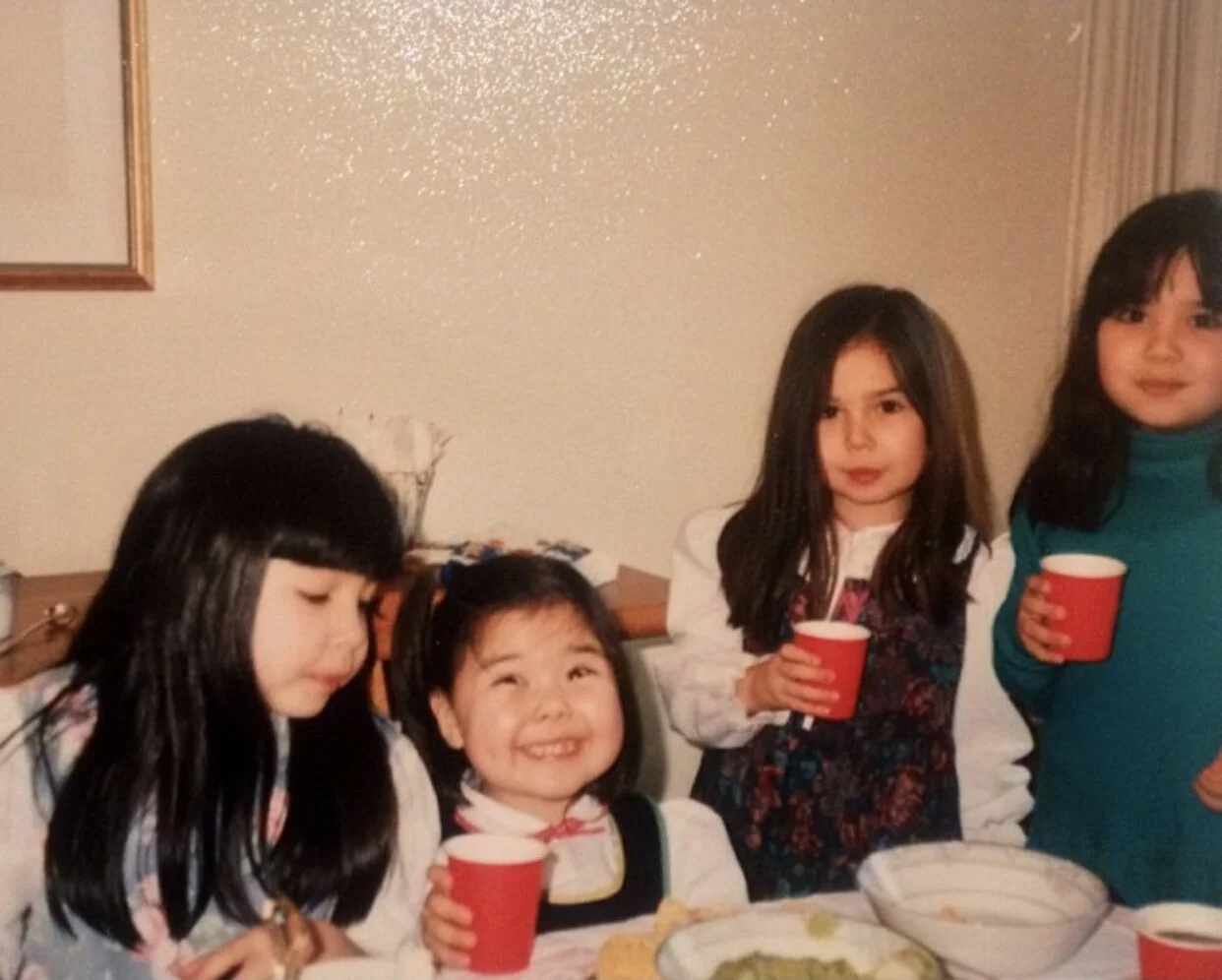
I thought of food as functional, as something you have to do multiple times a day. I grew up in a war-baby family. My mom survived a US-backed military dictatorship in her home country of Uruguay. My dad is a son of the Japanese internment camps. His diet tells a complicated story of coming from another country and then dealing with the trauma of surviving the camps. I don't have any bitterness about it, but I come from a mixed-race, mixed-ethnicity family and so my parents had to negotiate food in a way that I think canceled it out. My house became a typical American household - pork chops that were dry, mashed potatoes, broccoli with mayonnaise, and pesto pasta. I remember being acutely aware that we didn't have a coherent culinary point of view when I would go to my other friends' houses.
Did your mother take on the typical gender role of being the cook of the family?
No, but growing up, I was exposed to my close girlfriends’ moms. They were constantly policing their weight and their food intake. Even if my friends had a healthy relationship with food or cooking, they were constantly contending with their mothers making comments.
I feel privileged in that my sisters and my mom were a source of emotional safety and the padding for my insecurity not turning into an eating disorder. I felt emotionally held and valued in my household. I felt like I could be complicated, look a lot of different ways and I was always going to be loved and accepted. Even though I don't have a stereotypical immigrant story about food and growing up, I feel like it's an honest one.
Do you have any ideas for how we can create that space for women?
It needs to take place first in our intimate relationships. When we feel embarrassed, we often tell little lies or half-truths to ourselves and others, when the full, complete truth is what heals.
Growing up, I would perform my Japanese-ness for myself because the story of my Japanese family was fragmented. Same with my Uruguayan side. I would be like, I guess I have to like sushi. I was performing authenticity for myself, which was painful and confusing. I would ask myself, "What is a Japanese person like? And what is an Uruguayan?" And the whole time, I wish an older person or woman was like, "You. Just you are those things. Whatever you like is what a Japanese person likes.”
I am really grateful because my two sisters had such intuitive wisdom on how to support me. When you have three mixed girls who all have different body types, look differently, we were little baby soldiers of solidarity. They were like, the truth isn't the standard or, that's not worth our time and our tears, which didn't mean that we wouldn't cry about it. When you have that one person in your life that holds you in your darkness, that changes you. When someone in your life who looks like you or doesn't look like you, is brave with you and shares their insecurities or their vulnerabilities and holds yours, there's something very magical that happens. When I do my daily gratitude for all living beings, it's that everyone has profound connections in their life because that to me is what matters.
What has the journey around body image been like for you?
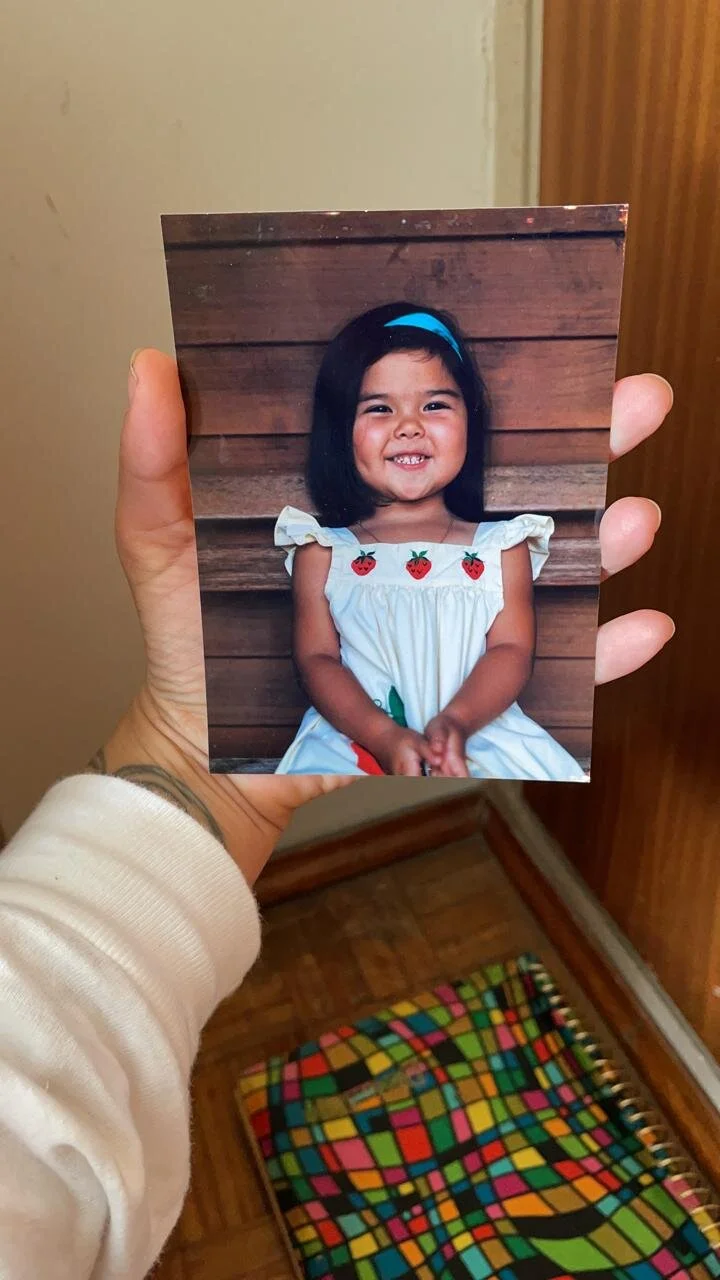
Growing up, I was a brain in a jar. Totally disassociated, hated mirrors, didn't like pictures. I had an avoidant relationship with my body. I felt like my gifts to the world were humor, smarts, and wits. I got so involved in the world of the mind. I think I made an unconscious early decision in my life to not investigate it. Then I moved to the Bay and was around people who were lovingly observing me and saying things like, "What if we move our bodies?"
My female friends were subtle geniuses. They would invite me to things, see that I was open to it, and then leave so that I could develop my own relationship. One of my close girlfriends signed me up for the gym and then left me alone and I got super into it, over time, on my own terms. My body image dramatically changed when I moved out here. I loved moving my body. Working out improved my mood, created great connections, challenged me, and even made me sleep better. It completely changed my relationship with food because, again, it’s all connected. After you work out, you want to eat well because it's one cycle that feeds itself. It gave me a lot of confidence. I noticed that I was a lot more relaxed. It opened me up to meditation and other forms of stillness. I think my body image got transformed because it was finally mine. Once I developed a relationship with my body, the image in the mirror was me.
Maybe subconsciously you were trying to deflect everyone else's idea of who you were or what you look like.
I just didn't like what I saw in the mirror and instead of taking control of the reflection and doing the deep inner work, I avoided it because it felt easier. That’s the biggest lesson I've learned my entire life is that avoidance is not sustainable and that easy, short-term solutions create long-term side effects. There's no shortcut. You're going to have to deal with it at some point. I thought that dealing with it was going to be so painful and come with all this suffering and it was quite the opposite for me. It was fun. It was empowering. It was enlivening and joy-giving. I really want to bust the myth that facing yourself is only ever painful. I think a lot of times it can be but life is painful. Don't avoid pain. Don't avoid suffering because then you limit the ceiling of your joy. You limit the ceiling of your aliveness. It's all one thing. So you have to go for it.
What is your perspective on cooking and eating as art forms?
It reminds me of painting. There is an intuitive aspect to it. There are people who follow recipes and there are painters that follow techniques. At a certain point, you have to let go. When I was really new to cooking, it was so technical. I didn't feel confident at all. It was like, what's the exact amount to measure? As I've gotten more comfortable, I'm not looking at the recipe book. I'm just smelling things, leaning into it, and trusting the process because I'm building my vocabulary. I'm building my fluency in the art of cooking.
Then there are the questions of, what is salt? What does it do? What is acid? What are fats? Why are they good? What combinations work? And then you have to engage the art form of figuring out what works for me? I am so not there yet but I'm excited to deepen my relationship to that aspect of the art of cooking and trust myself more. I still get nervous and there'll be moments in the cooking process where I'm like, oh, I messed something up. Once I'm in that doubt headspace, my dish always tastes disappointing because it reflects the doubt. I think it's an art form in that it reflects you completely like a mirror.
What's your wish for the women of the world when it comes to eating and cooking?
The freedom to pursue pleasure and experience with curiosity and attention. What I want for women is that very intimate, ongoing, alive, vibrant conversation, but that's not possible if the people who make our food and grow the ingredients aren’t supported. A lot of the conversations right now are centered around consumer and individual choices because that's where people feel they can affect change. We also need to hold the corporations and people in power accountable. The two are completely, inextricably connected. The women that you and I love and that we fight for are also connected to the women who are holding the recipes in Mexico, or anywhere else in the world. Our food system is transnational and global. We need to hold all women at the center of the conversation and not erase our own pleasure and experience in the midst of that.
This interview has been edited and condensed for clarity.