eat the bread
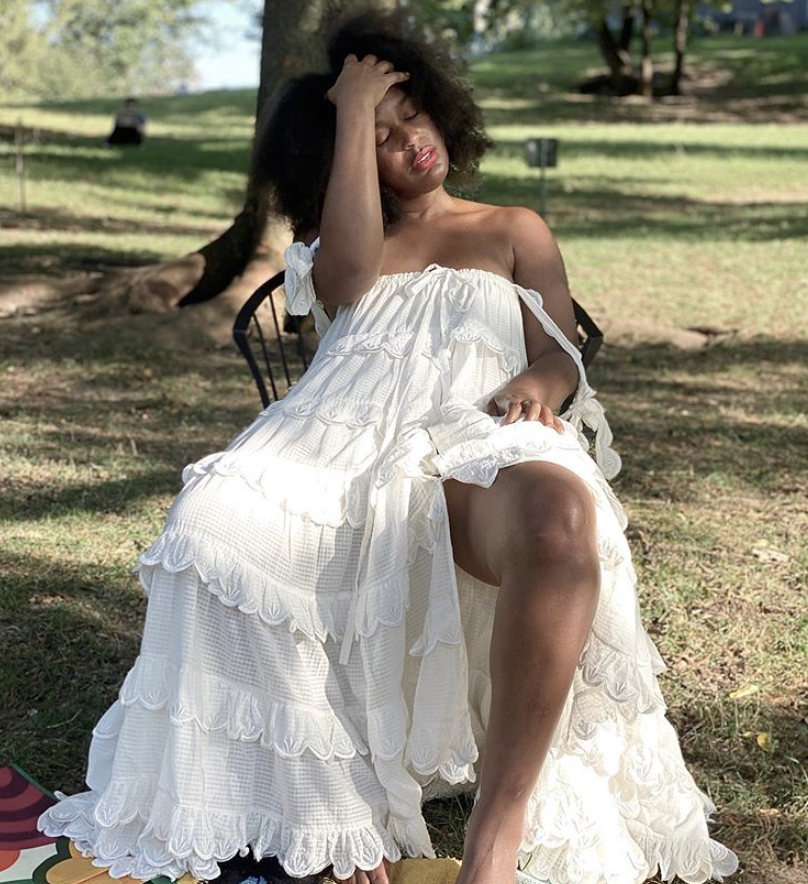
Leila is 31 years old, resides in Brooklyn, New York and works as a Personal Shopper.
What is the last thing that you ate?
Two plums.
What’s the last thing that you cooked?
It’s so funny. I’m a big fan of sardines, my father loves sardines. Everyone makes fun of me for it, like I’m an old man, but I love them -laughs-. I spiralized zucchini and made a sauce with sardines, tomatoes and onions. I’m from Caribbean descent so we love things like sardines and herring.
I definitely feel like it’s an old man thing to love sardines -laughs- What role does food play in your life?
I grew up in a Haitian household so there are very specific dishes that we made when I was young. When I think about those meals I think of happiness.
In general, my relationship with food evokes the word beauty to me. I love local, in-season food. I love going to a country and eating what’s specific to that region. I want to be fully immersed in another culture through food. I think of it as an art-form, an extension of beauty.
When I was younger, I was vegan for two years and my dad hated it. We would go on trips together, and I’d be like, “no, I can’t have the prosciutto” and he was like, “I don’t know what you’re doing with your life.” Then one day I had a piece of bacon and I realized I missed it.
How did you become vegan?
I went through a break-up! -laughs- My roommate randomly had this book, “Skinny Bitch”. I thought it was a novel, but it was about being vegan. It traumatized me. I threw everything out that wasn’t vegan and I started posting about smoothies and salads -laughs-. It was cool though, because it inspired my family members to eat a little bit healthier. Haitian food can be heavy, with a lot of starch, so it was a nice way to explore vegetables. Like, I didn’t know what kale was until I was 21 -laughs-. As I got older, I realized being vegan was a good foundation, but I didn’t want to put myself into a box and be so rigid.
What is food’s role in Haitian culture?
Food is very important in Haitian culture. More food equals more status. That has a downside, though. I have family members with diabetes because eating that heavy food every single day is problematic. This used to be a private struggle, but now no matter how delicious the food is, we know that these foods aren’t the healthiest to have every day. When my grandmother was alive, she would get angry with me for eating a salad -laughs-. It’s a challenge with older generations.
How do you make sure you’re nourishing yourself?
When I lived in LA, I loved going to the Hollywood farmer’s market every week. I had my mushroom guy, my honey guy, all the homies. I enjoyed speaking to the farmers, tasting, and seeing what was in season.
I love plating my food and setting up flowers for every meal that I eat. I’m the happiest and calmest when I can cook for myself. If I’m upset, that’s when I stay away from food. When I catch myself getting too low, I’ll make myself go to the grocery store and cook. If I don’t do that then I’ll eat a peanut butter and jelly sandwich for three days in a row -laughs-.
What dish feels like home?
There is this dish that my grandmother used to cook called Legume. It’s eggplant, spinach and carrots cooked down and made with beef served over white rice. I probably get to have it once a year.
What is a beautiful or healthy body to you?
A beautiful body is a balanced body to me. You have to go off of how you feel, and seek out the things that you actually like. Don’t fight against yourself, either. You can’t force things just because you think they are healthy. Be healthy and conscious but in a way that feels good to you. If you need a break, let yourself enjoy things. Be where you are and how you feel.
That’s good life advice, too.
It’s true for your career, too. I remember girls at work wouldn’t eat breakfast or go to lunch. I felt like they were killing themselves. I said that I was going to work hard, I didn’t say the job was going to kill me -laughs-. This idea of sacrificing yourself to send an email, wreaking havoc on your body and your energy..it almost became radical to take care of yourself.
We don’t need to find ourselves. It’s about trusting our intuition and releasing this idea that we need to look for things outside of ourselves. Everything that we need is already within.
Nourishing yourself and saying no to those outside voices that say, “you should be different” is a form of feminism. How has that changed for you over time?
In the beginning, I didn’t even think about food because it was just given to me. As a kid you only want the things you can’t have. In college, you have a cafeteria. After college, I read that book, went through a break-up and I gained this education. I read more books, watched documentaries, but I was young and too rigid with myself. I grew up and traveled and became more open to other ways of being. Now, I’m relaxed about food. I'm more balanced and happier because I’m not so obsessive. Of course, so much of that has to do with body-image, but I don’t even care about weight that much anymore.
All those days when I planned my meals or felt like I had to eat certain foods, I thought about food all day. When I I don’t think about it so much, I just flow.
Now I’m 31 and I’m like, these are the thighs that I have! I look back at old pictures and think, I was so skinny but I probably hated my body. Now instead of comparing ourselves to other people, we’re comparing ourselves to our old selves. I was fighting against my curves so hard! I would run like crazy, eat as little as possible, only drink juices and eat salads. I was skinny but my body wasn’t made to be like that. Now I walk, exercise, eat. I’m curvy but it is the body that was always trying to be.
What was it like for you to grow up and have your body image change with time?
When I was younger, I was an athlete so we worked out a lot, and ate trash. We were so athletic, it didn’t matter. The first time I started starving myself was when I started to work in fashion. I came to New York and entered that world. Especially being a minority, there aren’t that many people in those spaces, so when you're there, you’re almost made to feel like you should feel lucky to be there. The body types are different, too. In my culture, we are very curvy. Being around these girls in fashion, they were stick figures. I was trying to wear the same clothes they were, feel like I was chic, and not wear things that were too tight or show my curves too much. I became a little obsessive about my body, working in those spaces, with people who didn’t look like me. I tried to fit into their world. Years later I wore a sweater dress that was a bit tighter, and all my friends were like, “wait, you had this booty all along?!” -laughs-. I became afraid to wear fitted things, or to come off too loud or different than others, which is horrible. I became obsessive about weight.
Wearing tight clothes can feel like a statement, good or bad.
I didn’t want to stand out anymore than I already stood out, for looking different or being different. There are stereotypes about you already, and you want to be in those spaces and not cater to those stereotypes.
It’s hard to be a woman in the workplace in general, I can’t imagine also having to think about race.
You’d have the skinniest girl working in PR saying, “oh my god I’m so fat”. It was all around you. A size 0-2 calling herself “fat” and you’re probably a size 4 thinking, oh my god I can't get to a size 6. You just want to stay in that solid 2-4 range. There were times when I wore a 0 because I was so obsessed about not being in a different size range. It’s a weird thing. Fashion makes you think you have to be a certain size. It’s what society puts out there and we were brainwashed. I talk to a lot of my black friends in fashion about this. We were all so thin, quiet, working 10x harder than everybody else. Now, I don’t care. I do what I want.
The crazy thing is that it’s all made up. When you look at the diversity of the world and how different people look from one another, how can just one version be considered beautiful?
In the spaces I’ve been in, I’ve seen people treat others differently based on the size of their body, or the color of their skin.
Do you think fashion is changing?
It’s definitely changing, given everything that’s happening in society. Everyone is putting their voices together and calling companies and businesses out. It is becoming a little bit more inclusive. They are a bit more sensitive and aware of the messages they are putting out. I love seeing pregnant, curvier, petite, taller, women in campaigns. The person I was at 23 is different from who I am at 31. Now I say things to my executives, I speak up. I was furloughed during this pandemic and my company wanted me to come back and I said, “I can’t come back unless your Instagram changes. It’s so white.” They were like “yeah, we’re actually working on that.” I would never have said that 10 years ago. At this point, my work has to align with my morals. If it doesn't, then I need to go figure something else out. Money is not more important than my morality.
What is your wish for the women of the world in their pursuit of the arts of eating and cooking?
My wish for the women of the world is for them to eat the bread! -laughs- Just have that one thing that you want! When I was younger I was so rigid about everything. It’s so much healthier when you don’t think about things so much, become compulsive and fall into that deep dark place with food. Balance, ease, and letting go of the pressure is key. We need to use food as a way to heal, to commune and for pleasure.
This interview has been edited and condensed.