like most women
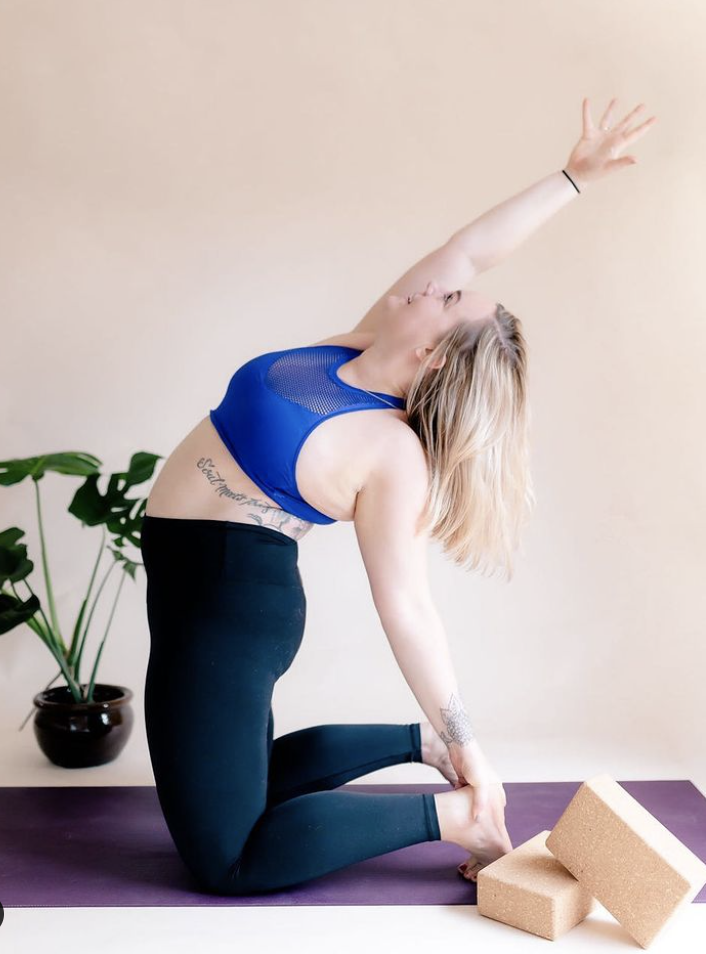
Lizzie is 31 years old, and works as a wellness critic and digital branding consultant. She runs the social media account @donutsanddowndogs. She resides in Seattle, WA with her husband Dan.
I’ve learned so much from my research and the women I’ve interviewed, and I consider you an expert on the matter! Do you have a sense of the roots of your blog? Was food a big part of your household, was movement?
Growing up, my mom was overweight. Like most women, she had a complicated relationship with her body. She made it clear that she didn’t want my brother and me to feel that way about our bodies. We were a very food-positive household and she really encouraged us to enjoy food. But there was always, of course, her own underlying relationship with her body. I could tell it was upsetting for her.
I was into ballet at that time. I had generalized anxiety, I mean what teenager doesn’t? and channeled all of my energy into being small, and thin, and feeling like I had control over my body. It felt like controlling my life. I don’t remember exercise or sports being a huge focus; my parents did things like go on long walks or work in the yard. My dad’s back would go out or my mom would make a comment about not being able to do something and, I don’t think I realized that those were just common adult experiences, so I kind of panicked and got super focused on this idea of “fitness”. My grandparents also didn’t treat their bodies well. They would say things like, “oh wow… X is happening… if only there had been something that we could have done!”, and I remember thinking, well, there are some things that you could have done. That got into my head. I realized that there are some things that you can control, and some things that you can’t. It came from me wanting to learn the best tools to best serve my body and my health.
What was that like for you in terms of body image? Do you feel like you’ve had an evolution in that respect?
When you're a taller girl in middle school and the guys haven't really hit puberty yet, you feel like you're a giant all the time. I’ve always been very strong and, I think especially in the 90s and 00s, we didn’t get the messaging that was a good thing. I wasn’t tall and super thin, so I didn’t have a supermodel body. I also wasn't a basketball or volleyball player where height is celebrated. I was trying to do ballet. I think a lot of my body image came from being really tall and strong but not falling into the natural things that tall, strong girls “do” and being more feminine and being really, deeply self-conscious about it. I had this 180-degree shift when I got to college and started rowing competitively. Suddenly I had the “perfect” body type for something I enjoyed. College was really empowering and then naturally through my 20s things evolved. I felt great in my body, and then I got into a car accident and couldn't work out for a few years, I realized I was putting a lot of worth on my body for what it could do physically and how strong it could look.
It does change day to day, week to week. I try to remind myself to be kind to myself and my body. What has this evolution looked like in terms of food for you?
When I was in college I started being vegan because I had been reading about it for a long time and was so drawn to it. It was very empowering; doing something completely centered around health. I was vegan for 7 years and then stopped because I had the realization that the way I was eating no longer made me feel good mentally. Physically it did, but having so many restrictions on what you can eat did not feel great. I allowed myself 2 months to really explore. Junk food was a huge part of that -laughs-. Since then it has been an exploration of how I actually feel in regards to what I eat. If I have a big meal one day, it doesn't mean I have to restrict myself the next day or do a workout. Right now I'm trying not to place labels on myself. Taking the time to notice how my body feels moment to moment. I’m doing Whole30 with some friends (which goes against everything that I just said!) but my husband said to me, “you're in a really bad mood and it’s because you're getting so specific with food. You need to break Whole30 for a meal.” And he was right, it was getting in my head. It was a reminder that I can have guidelines, but they don’t have to be strict.
It’s such a core human need to fuel our bodies and yet this is such a gap I’m seeing in terms of how women understand themselves. Mindfulness and meditation are obviously becoming more mainstream but it still feels like there is still so much more room to grow in terms of how we talk and think about food.
It's hard for our generation because when we were starting to grow into and learn about ourselves, you couldn’t hop onto Google. You were reading a magazine and it was like, “here’s what a model eats in a day.” It wasn't good information. I think a lot about how as little kids we were taught to finish everything on our plates, not necessarily to pay attention to our body and listen to when we are full.
We get the messaging too that if we aren’t small then our body is “wrong”, and we need to look for a fix. No one is talking about listening to your body and thinking about what feels good.
What food feels good to you?
I love my morning smoothie. I love it so much that sometimes I wake up and I’m so excited to have it. I feel like I'm nourishing myself, and it tastes amazing. It’s strawberries, a banana, a scoop of peanut butter, vanilla Vega protein powder, collagen, cinnamon, and CBD if I’m feeling crazy. It’s basically a peanut butter jelly smoothie.
That sounds incredible.
I think the tendency when we’re tired is to go get a coffee, or something quick. When I’m really stressed, being able to give my body really good nutrition makes me feel like I'm taking care of myself.
What is something indulgent, not typically healthy, that you love?
High-quality gluten pasta or pasta covered in butter is the ideal situation. It’s simple, delicious, perfect. Really good pasta or bread is the best.
Do you have tools, practices or resources that have been really helpful for you and your community?
The first tool that was helpful was telling myself to disconnect from labeling my food, or exercise. A lot of people say, “I go to spin class 5 days a week.” Then if you have a week that diverges from that for any reason, you feel bad. Reading books and watching videos from women who have struggled with eating disorders has been really helpful. I remember starting to read about orthorexia and thinking, “oh my gosh, I have this.” I didn’t realize it was a problem until I started reading about it.
I think mindfulness can be a really helpful tool in terms of listening to your body. Yoga was helpful; the whole goal is to feel good in your body. Having time that isn't focused on improving or hitting a goal, but being in your body was really helpful to me. There is a book called, The Body is not an Apology. It’s about how as women, we’re always apologizing for our bodies and how to shift that. I think about all the ways that we say sorry as women.
What’s been the best part about building your community?
I think that when we were in our formative years, there wasn't a culture of talking about food or wellness in a sustainable way. I remember being in college and my friends confessing that we all had eating disorders in high school. And none of us talked about it. There were so many times that we were trying to white knuckle things by ourselves. Something that I’ve loved about the community that I’ve created and the people who are a part of it is that we are realizing that these things are really common. They are a shared experience and people are so eager to talk about things and have a conversation. I’m constantly blown away and inspired by people’s vulnerability, what people have gone through, and the tools that they share. I’ve found all these registered dietitians, naturopathic doctors, and medical professionals who want to change things. It can be frustrating being in a woman's body and wondering why society hates us so much. It's been wonderful creating and finding this community that wants to fight back against that.
Who in the world would you like to sit down for a meal with?
I grew up watching the Barefoot Contessa and I have all of her cookbooks. I love her so much and I love how excited she gets about food and sharing food with other people. Being able to sit down with her and chat about food and talk about these incredible decadent meals would be amazing. She celebrates food, is in a larger body, and doesn’t give a fuck!
You’re going on a road trip with your friends, what are you getting to have on your drive?
White cheddar cheetos, or white cheddar popcorn, some gummies, preferably sour patch watermelon if they are available, cold brew and then if it’s a gas station that sells fresh fruit I try to get a banana or an apple.
All about balance. Would you rather never be able to eat a donut again or never be able to do a downdog?
I think I'd rather not be able to do a downdog because there are adjacent moves I can do but there is nothing like a donut -laughs-.
Do you have a wish for the women of the world?
I hope that everyone is able to find a way of eating and moving that makes them feel really empowered and excited, liberated. Liberation is often defined as, “she eats whatever she wants, or never works out” which isn’t realistic. It’s important to have structure without being completely bound by it.
From teaching yoga, I see that so many people do not know how to listen to their bodies. They’re not in tune with their bodies or emotions. I wish people were given tools to listen to their body and articulate how they feel.
Do you think the world is changing?
Before COVID, I coached high school rowing part-time and would get to see these high school girls, their relationship with fashion, and how they embrace their bodies. It's incredible. I've had a few girls come to me and say, “I'm feeling anxious about my relationship with food and I want help.” It’s cool to see how our generation is shifting and then witness teenage girls and how they are shifting, too. They are like, “do not shame me for what I am wearing, do not tell me what to do with my body”. It’s incredible to see young girls growing up in this culture and being encouraged to act like that. We had to walk so that they could run.
This interview has been edited and condensed.