nourishing ourselves and others
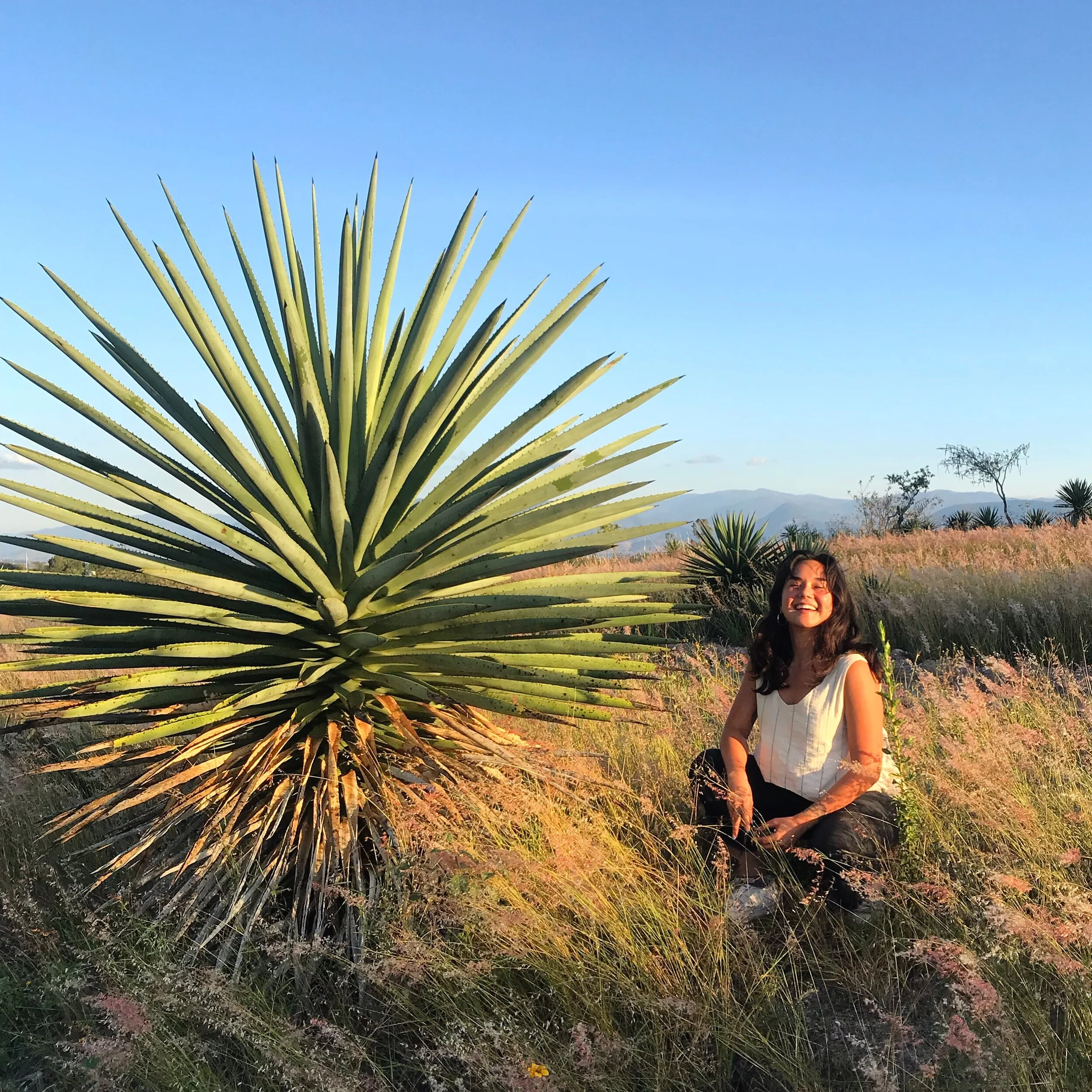
Niki is the co-founder of Neta Spirits and resides in Mexico City, Mexico. You can learn more about Neta Spirits here.
What is the last thing you ate?
Literally, just now, I finished eating a bowl of sheep's milk yogurt and granola. I just got back from a trip and I have nothing in my fridge. Then I had a piece of bread and lime pickle.
I have been having a really similar eating style to that, and I didn't just get back from a trip -laughs- Lately, I don't know what's even in my pantry or my refrigerator. But things look good and I'm hungry, so I just eat them -laughs-
Exactly.
What was the last thing you cooked?
It's been a minute now. Because, again, I was traveling. I think the last thing I cooked was a type of frittata. This has also been my pandemic go-to. I'll cook off a bunch of potatoes and then fry onions, then beat eggs with some type of herb or whatever, and then make a kind of frittata, like tortilla, tapas-type joint, and eat that with some salsa or mayonnaise, or whatever.
Do you have a country that you want to visit specifically to enjoy the cuisine?
Yes, I am really dying to go to Thailand or Korea. I've never been to Asia. I think those are two of my favorite cuisines.
I'm so happy that Korean food has taken on such a global presence and become assimilated into classically American culture.
Yes, I agree. For me, banchan and Korean food, in general, is soul food. You have something crunchy, you have something salty, something sour. I think it's thoughtful, but generous food.
I also love that there are randomly some American dishes in banchan from time to time. Sometimes, you'll just see potato salad. I need to research a little bit of the background of that, but it's like, okay cool. Potato salad is good. Okay, let's just enjoy it. -laughs-
I do think that some of that is from the war. I think Americans brought whatever government cheese, and everyone was like, "It's salty and umami. Whatever, let's just throw it in the soup pot and see what happens." They probably shared potato salad, too.
Speaking of fake cheese, do you have a favorite junk food?
Yeah, I love Cheetos and Doritos. I like cheese balls, too, but the torciditos (classic Cheetos), which is what we call them here, are so good.
What is your favorite environment to eat in?
I really like Korean places where you're kind of in your own little box and you're sitting on the floor. Or a Korean barbecue place, in general. In Mexico City, there's a K-town and they have these homemade extraction systems in the middle of the table and you have these tubes coming out of everywhere. I like that it’s not precious, and the sense of casual bounty.
K-Towns the world over have such an energy to them.
There's a vibiness to them. The ice-cold water. The people coming back and forth. Your table covered in little plates.
I also love a Parisian bistro where people are spilling all over. I love that energy when people are talking loudly and drinking wine, and then there's that movement of what's happening at the table and outside of the table. Where you're at the table, talking, eating, and then getting up and having a cigarette and drinking from your glass.
I just got transported. I want to be in that picture you painted so badly.
Me, too. I think I'm missing it more now because we haven't been able to dine in these situations.
I love that comparison, too. A Korean barbecue restaurant, and a Parisian bistro. They represent those cultures, distilled down in so many ways.
What does food mean to you?
Food for me is essentially about nourishment. I see that not only from the perspective of palates and energy of the body, but also for your identity, soul, and for connection.
Food has always been kind of a portal for me. It was a way in which I could understand parts of my own history or identity, being bi-cultural. About not having a whole lot to hang my hat on because I'm a fourth-generation Japanese-American. So much of our history and diaspora is about this disappearance or erasure [of our culture] and so having my grandmother prepare certain foods, felt like, okay, I am a part of this. Those foods tell a story about where we're from. Then, it was also my way of connecting to my grandmother on my Uruguayan side, my mom's side.
As an adult [living in Mexico], my connection to food has been a portal to the countryside. It has been a way of understanding Mexico through the lens of agriculture and rural and indigenous food and lifestyle.
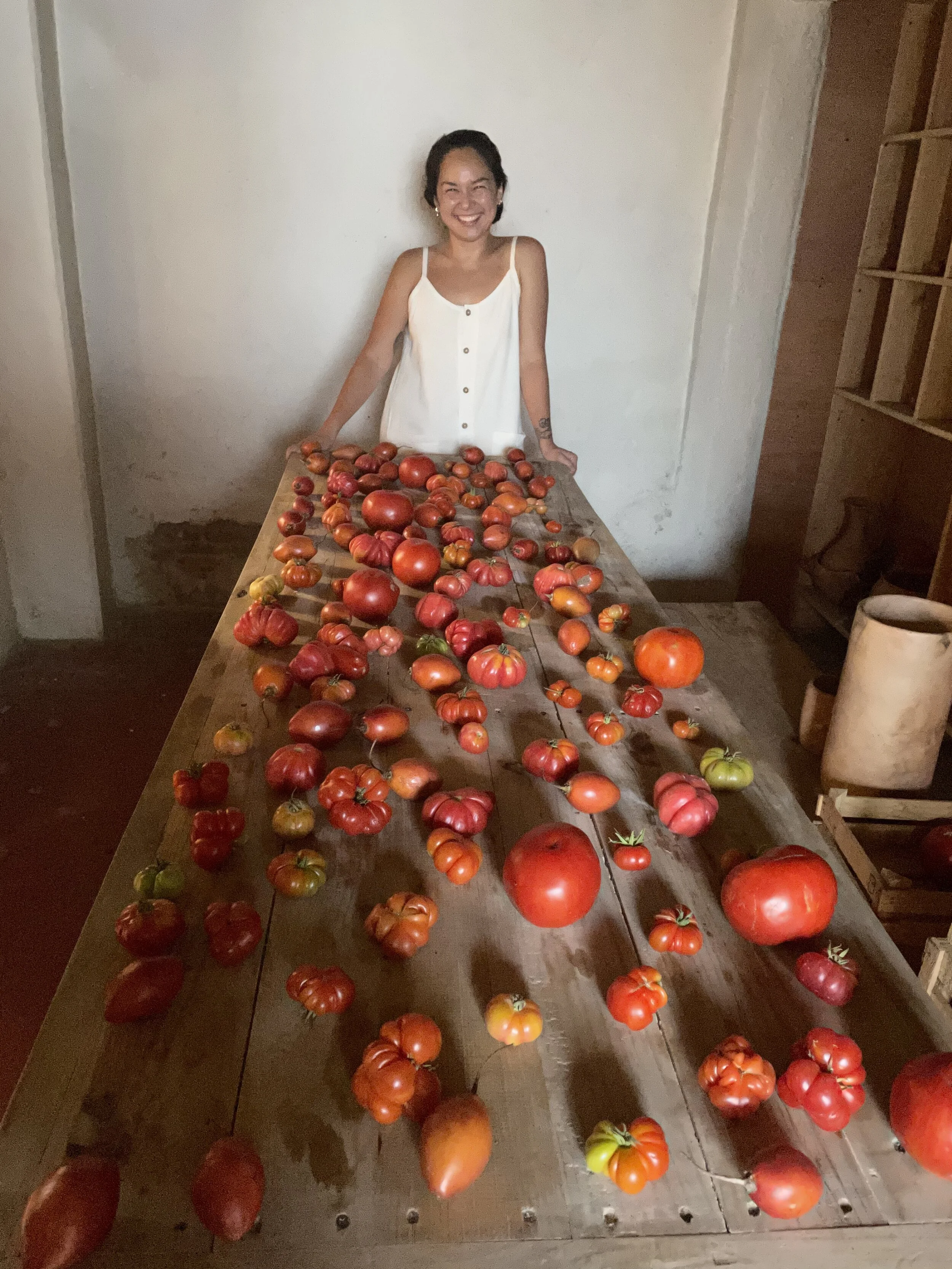
I see it as something that's so transportive. It takes you to so many places. It's nostalgic. It's like a vessel for time travel and connection.
It seems like the places that you've been or the places that you're from, have likely led you down a specific path.
Yeah, absolutely. I think [that’s because of] my own feelings of displacement or of not having a coherent narrative around my own culture. It is a mishmash and yet it is American. I think that coming to Mexico and living in this country has given me this sense of integration, an ability to understand food or culture in a way that's not so fraught for me.
It's just one thing. It's so many things, but it's one identity.
Well, it is and yet it's so diverse. Oaxaca itself is home to 16 different ethnolinguistic groups. All these different cultures are so deeply rooted and being able to have this sense of, wow, this process or these things have been happening for thousands of years has felt very grounding.
What role did food have in your household growing up? You have so many references for different cultural cuisines. How did your family interpret all of that?
Well, my grandmothers were really the ones who actually cooked. Their cuisine was founded on some type of cultural reference. My dad was a pretty good cook but he was traveling all the time when I was growing up. He had his staple dishes that he would make during specific seasons. My mom never was a good cook and would throw whatever together. I think that's actually why I got into cooking at a young age. I would make my own lunch. I would go shopping. I decided to be a vegetarian when I was 13. There were certain things that we grew up with that you could consider a funny cultural mishmash like white rice with soy sauce, butter, and Parmesan cheese.
Or like, in Uruguay, we drink a lot of tea. There's high tea, we call it a merienda around 5 o'clock. Waking up as a kid, my mom would always prepare me black tea with milk.
I love this picture of a little kid drinking black tea -laughs-
It's a custom that I still have today. I drink tea all day. It's something that people assume is more about being Asian, but it's actually from my mom - Uruguayan black tea with milk.
Do you have a meal or dish that feels like home to you?
My grandmother, whenever we would get to Montevideo, would make a stack of milanesas. That's home. Milanesas with a squirt of lemon and mashed potatoes. Also, my dad had an Indian roommate in college and so his dish is this Westernized Indian curry stew that he would make every winter.
I'd love to hear a little bit about your journey around food. Was it always easy for you? Were there markers in your life that signify transitions?
For sure. I think that the first shift in my relationship with food happened when I was, probably 13, or 14. My sister and I were children of the 80s or 90s, this kind of Save The Whales moment, you know, Free Willy. I got really involved in fundraising to save the dolphins. I had this moment of my political consciousness or awakening where I started to feel like eating meat was not for me. I became a vegetarian and was trying to learn about what's healthy, or how I could eat in a balanced way without eating meat.
Then, there were later moments when I started volunteering in different countries in Latin America every summer when I was 16. I went to a small village in Nicaragua. Then I was in the Dominican Republic and then Costa Rica when I was 18. During those years, I realized the privilege of saying "Oh, I'm a vegetarian." In a lot of these communities, having meat was a real event and privilege. My own big young teenage righteous self, was like "I'm against all these things. Save the animals. Save the whales, blah blah blah" shifted to "Okay, well, what does it mean to eat meat ethically?" or "What does it mean when this is something that's really important to a culture and to a cuisine?"
Then, in college, when I was 17, 18, I started eating meat again and having a little bit more of a nuanced understanding of culture and cuisine, and being a little bit less dogmatic.
Now, living in Mexico I have the privilege and opportunity to be close to the production of crops and to agriculture in a way that I never was growing up. I had a pop-up restaurant from 2011 to 2015 and catered a million events, cooked a bunch, and began to understand the effort behind all the products. That changed my own habits and how I approach feeding myself and feeding others.
That's really powerful. What are some of the ways that your relationship changed?
Well, I think I started to really understand seasonality. Also, the relationship with the people who are growing the food became so important. I started going to this little market that started up in Mexico City called Mercado el 100 which hosted producers from within a hundred kilometers of Mexico City. It became a part of a ritual. Every Sunday, I would go and I would spend hours at the market because I would sit and talk to everybody.
It was such a source of wealth to be able to cook these foods and be like, Oh, my friend made this. Cooking became saturated with this type of meaning. I wanted to have something made by this person or grown by that person. This is still how I prefer to shop. I like to know where things are coming from and who's making them. Buying these products became my way of participating in community.
What are some examples of those ingredients?
I remember trying these guavas, pineapple-guavas, for the first time. They're called feijoa and I'm not sure how they made their way to Mexico because they are a Brazilian fruit. But for some reason, it grows really well in the Chinampas gardens of the southern part of Mexico City. My friend, Abel, who was a farmer and a real mentor to me, shared this fruit with me and I remember trying it for the first time. I was like, "Oh, my god” It was so...my mouth is watering just thinking about it.
There are so many incredible ingredients here in Mexico. Cacao fruit from the pod, tortillas made from different types of corn.
The nuances start to take on more importance, especially when you're working with the producer.
For sure. Actually going to see the farm and seeing, oh, all those feijoa were from this one tree in their front yard. In the market that I go to here in Oaxaca, there are these ladies who sell stuff they grow in their backyard or traspatio. They might have a pear tree, and it's just that one tree, and they just have however many pears that the tree is going to give for the season. There is this flower called rosita de cacao which is used in a drink called tejate. These trees sustain a whole family. The trees give flowers year-round and the price per kilo of these flowers is quite high. People are sustained by these flowers and this tree and it's those relationships that are so incredible.
Wow, that is amazing. I wish every person, every child, could pick a perfectly ripe piece of fruit, vegetable or a flower and eat it. I think the world would be a better place.
What would you say is your mission or the goal of your work?
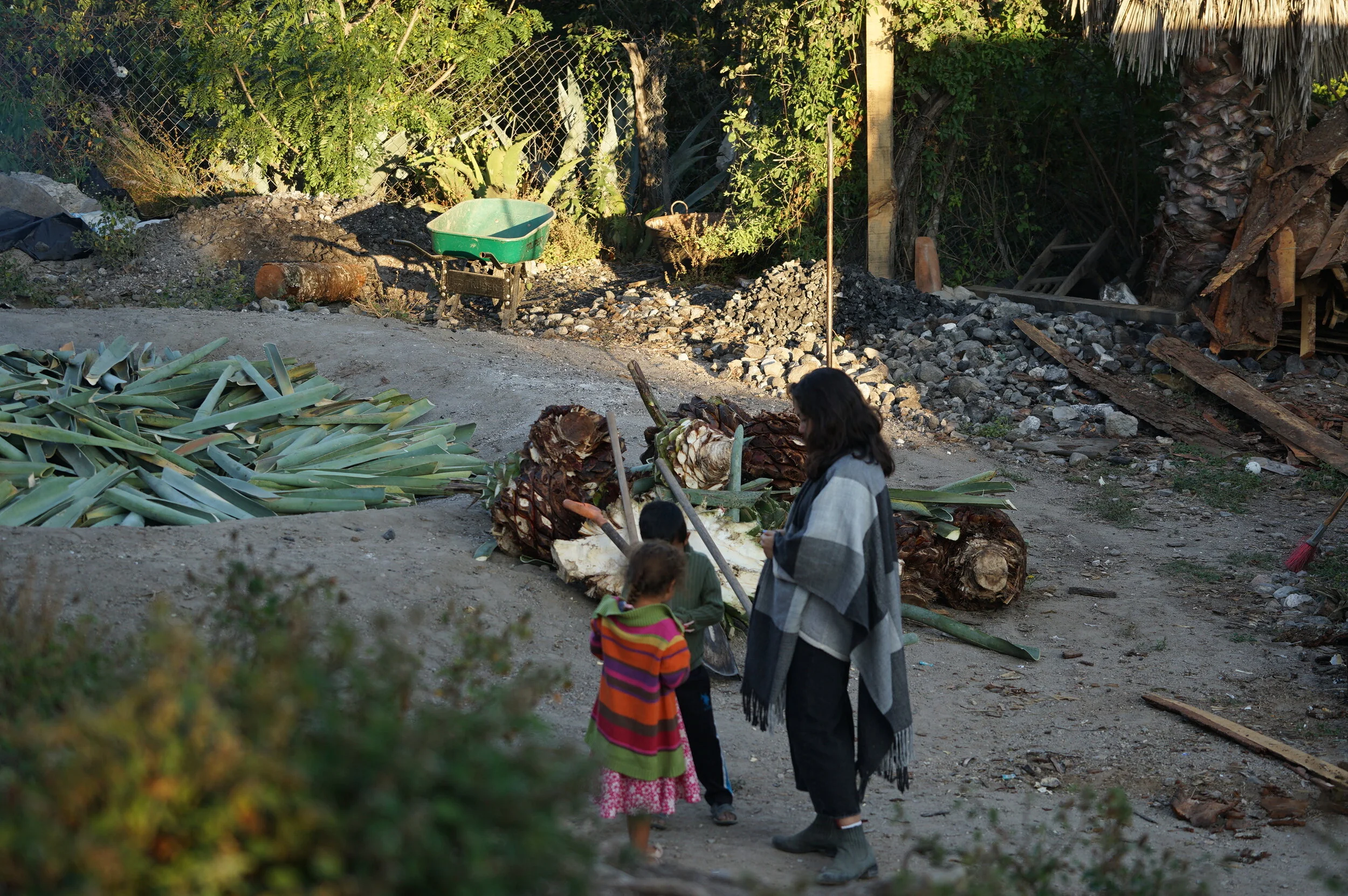
I think for me, it’s about connecting to history, stories, and to the land. I had been looking for this passport into rural Mexico, access to this whole world that I didn't grow up with. It’s a source of tremendous inspiration, groundedness, and rootedness. I work with a cooperative of farmers and mezcal producers in Miahuatlán, which is about two and half hours south of here. This is the work that makes me feel connected and that's meaningful.
Part of my work also has to do with the preservation of landscapes and biodiversity. It’s also about freedom and autonomy. Hopefully, I’m creating avenues for people to make a living wage and have access to cash, which is necessary in this world. It’s about keeping a community intact through structures of mutual aid and support. That's something that I feel really passionate about and I hope to contribute to, because I think that it’s, in some ways, passed on to our future.
That's powerful. It sounds like you have your hands in a lot of different projects. What are you up to right now?
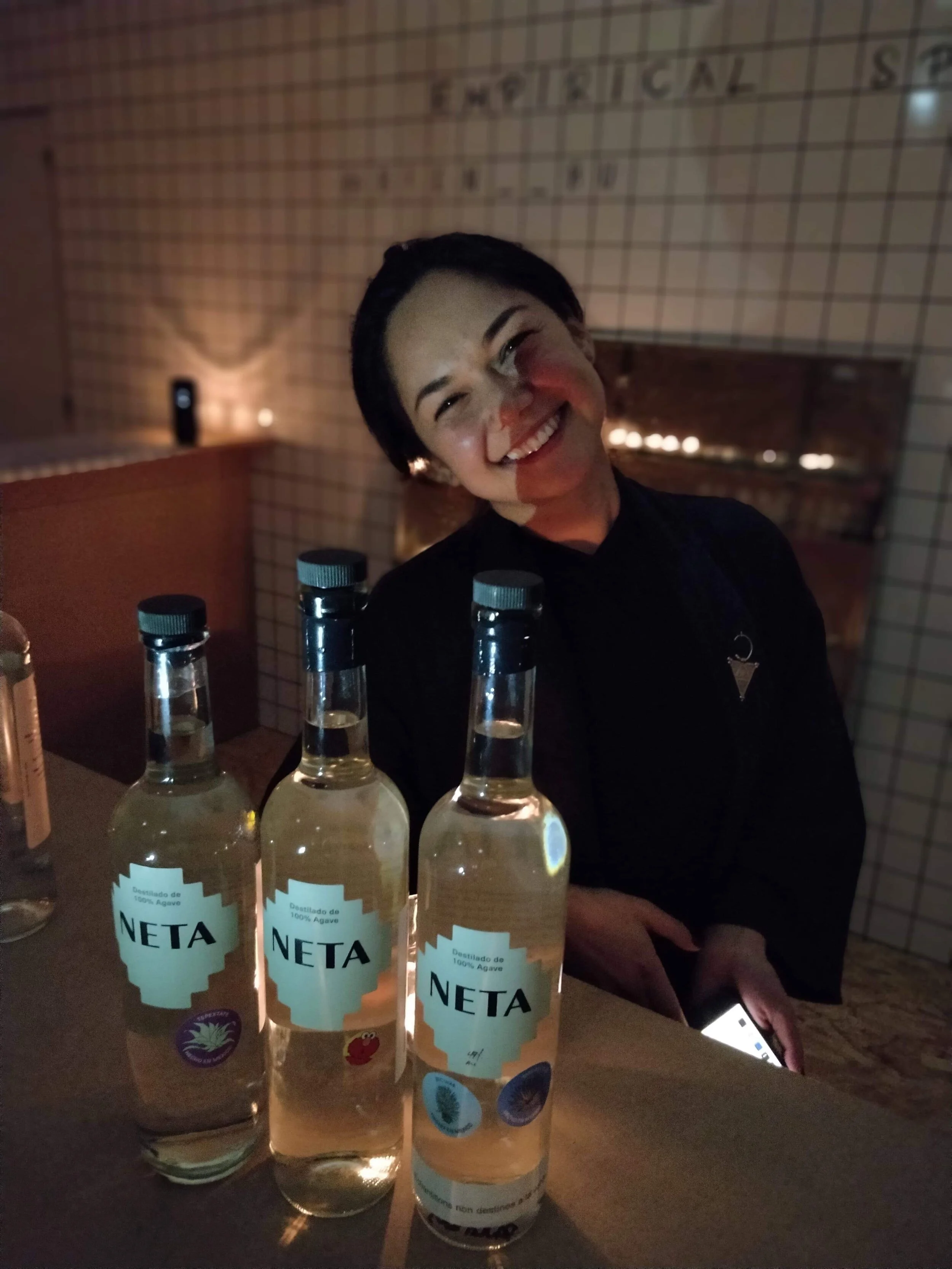
Currently, I am one of the co-founders of a mezcal company called Neta. I’m also currently working on a story about the Asian-Latino diaspora.
What's a call to action for people who are living in America? Is there any action that we can take or something that we can pay attention to in more detail to benefit the global community?
Learn about food and water sovereignty, and accessibility in America and beyond. Read, watch, gather, and figure things out, as there are resources out there. If you're in a position to donate, I think that it's important to be in the practice of giving up something, and usually that can be some cash or time. To feel those things in your body and in your wallet is important because all of us are going to have to give something up to create a more equal world. To do that as a practice and as a ritual is important. For me it’s like, maybe I can't buy that fancy thing but this is giving me meaning and this is also literally helping somebody who doesn't have what I have.
Do you have a wish for the women of the world when it comes to the arts of eating and cooking?
My wish is for food security. Our ability to nourish ourselves and others no matter where we're coming from. That we all have the ability to share those experiences with one another.
This interview has been edited and condensed for clarity.