everyone’s share
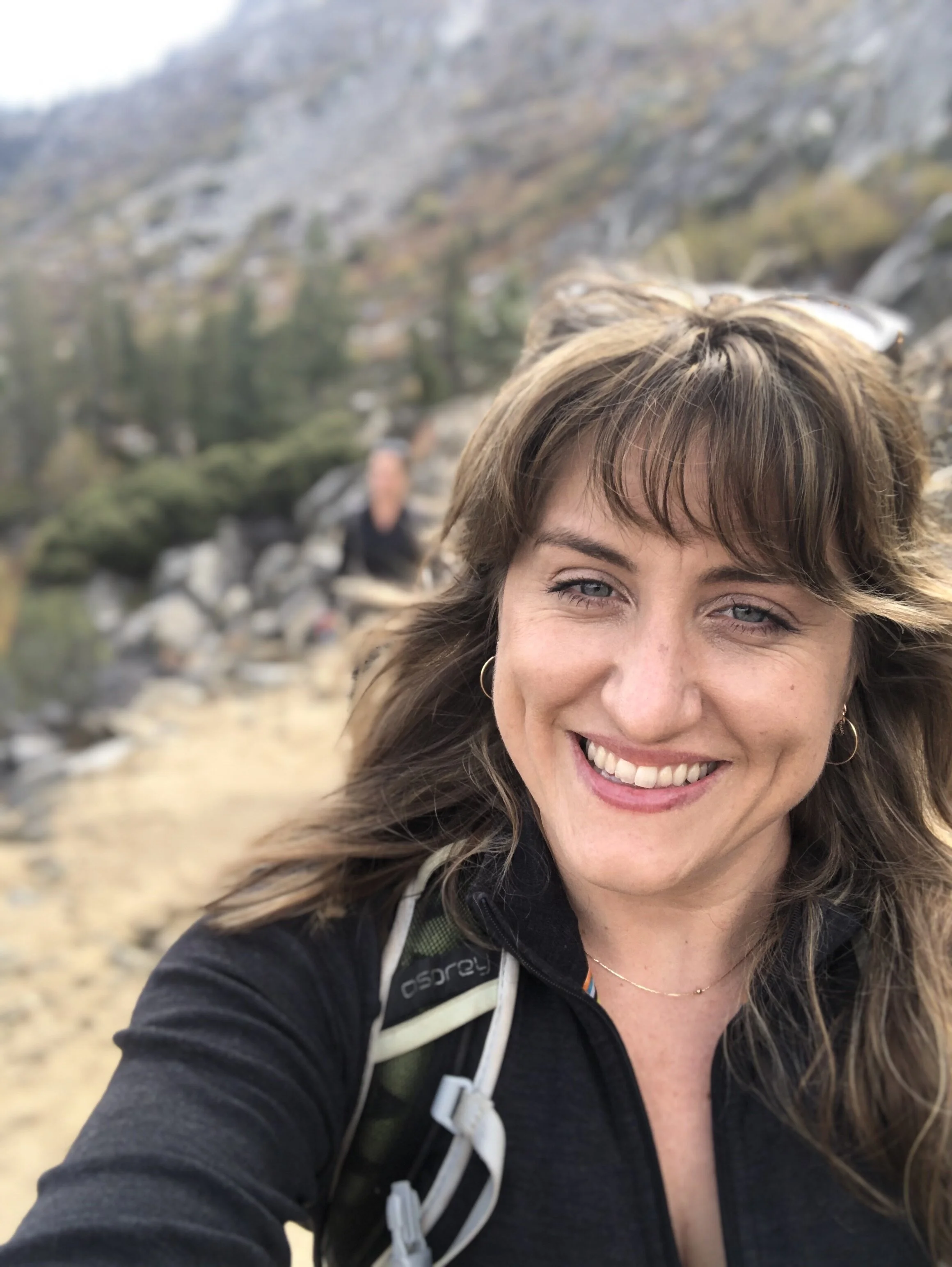
Moti is 32 years old, and works as the Food & Beverage Program Specialist at Chime. She resides in Oakland, California with her fiance, Leslie and dog Maya.
What’s your most indulgent pleasure?
Reese’s Peanut Butter Cups! I’ve been sober for some time now and having a Reeses after a long day is like my equivalent of pouring a glass of red wine - except way less fancy.
What was the kitchen like when you were growing up?
When I was in second grade we moved to a commune. My parents are incredibly unconventional. There was a communal kitchen space, and that is where my mom made our dinner most nights along with other folks cooking for their families.
We were vegetarian because my parents had been living in a Hindu ashram for ten years before they moved to the commune.
What was your school lunch like growing up?
An argument between my mom and me. -laughs-
Being a kid and vegetarian was a huge source of shame for me because my mom would send me to school with tempeh or tofurky sandwiches. Kids would be like, “what the heck is that?” And I’d just be like, “it’s tempeh and I’m in second grade, don’t judge me!”
Now it’s cool but it’s like, why’d you have to be so mean about it back then?
I know you eat meat now. What was it like to depart from vegetarianism as an adult?
It was scary. It felt like I had dead flesh in my mouth. Like I was chewing on sorrow and sadness. It didn’t feel right.
Ultimately, the first time I ever ate meat, it was chicken nuggets in the dining hall at UC Santa Cruz. I had the munchies and those chicken nuggets just looked so good.
How did you start working in the food industry?
I didn’t know what I wanted to do with my life. One day I happened upon the UC Santa Cruz student farm. I got an internship there and would go and pick blueberries for a varietal trial. Working with the earth just felt right to me so I got my degree in Environmental Studies with a focus on sustainable agriculture, specifically Agroecology. What I love about Agroecology is that every living thing in a biological system has a job and a purpose that helps another living thing. It wasn’t until I started working on the farm that I realized I didn’t know where coffee came from, or where food came from in general. This was back in 2009 when Starbucks was everything and “farm to (fill in the blank)” was just catching on. When I started to think about it, everything changed for me.
That’s beautiful
There were tricky times, too, though. When I started to think about where food came from, I understood the deep inequity of our global food system and the suffering and injustice that is behind it. I understood what farmers and farm workers endure on a daily basis so that I can finish half of my meal and throw the rest in the trash.
It messed me up pretty badly to the point where I just stopped eating because I didn’t know what to choose to eat. I got so emotionally attached to where my food came from.
How did you reckon with that?
First I got really really really sick. I had completely stopped eating. Then I found an internship where I could go and live in a coffee-growing community, live with a host family, and do a research project. I really wanted to do that so I got better so that I could go. I lived deep in the Veracruz mountains of Mexico without wifi, cable, cell reception. I gained so much respect for the people doing the work. I realized that me feeling bad about the situation helps absolutely no one.
The experience helped me pivot to, what can I do to help? I got back from my trip and found a job building farmer’s markets and that healed every part of my soul that felt sad and broken. I was working directly with family farms to help them sell their produce.
Is there anything from that experience that you think is important to highlight, that might help someone else feel seen or heard who is going through something similar?
Getting support. I attended eating disorder therapy sessions to get that support. Sometimes that didn’t feel quite right because my issues didn’t have to do with body dysmorphia, but rather the state of our global food system. My doctors didn’t really know a lot about that. My condition was defined as orthorexia - an obsession with health and wellness, but I think there’s more to it than that. There was value in therapy though. We’re such a culture of watching tv and eating. It’s hard for a lot of people to just sit down and eat food with nothing else happening. Learning how to eat with intention was very helpful.
What was it like to work for farmer’s markets?
College taught me what a sustainable food system is, but it didn't give me the practical knowledge of how to create one. I learned from the woman who had created the farmer’s market program in California. She had written the original legislation and just happened to be my boss. She taught me so much!
Do you think that part of your evolution is realizing that maybe you can’t solve the global food system, but you can make a difference in other ways?
I came to the realization that I can’t fix it. I have an incredible amount of privilege compared to most of this world. I’ve realized that if I focus my energies on one small piece of it- I can affect small, but impactful changes towards a more sustainable food system. Working at a farmer’s market taught me that I’m a connector. And I can connect people to create a better food system.
I miss my farmer’s market friends, though. I think my favorite food memory from there is with my best friend Baldo, a farmworker from Hollister. He taught me how to make a farmer’s market meal on the tailgate of a farm truck with the knife used to cut fruit samples and the lid from a plastic container as a cutting board.
Then he’d share it with everybody, and even make some of the customers have some, too. Eating food from the person who grew it, picked it, prepared it and then fed it to you, that is a rare experience.
This interview has been edited and condensed for clarity and brevity.